
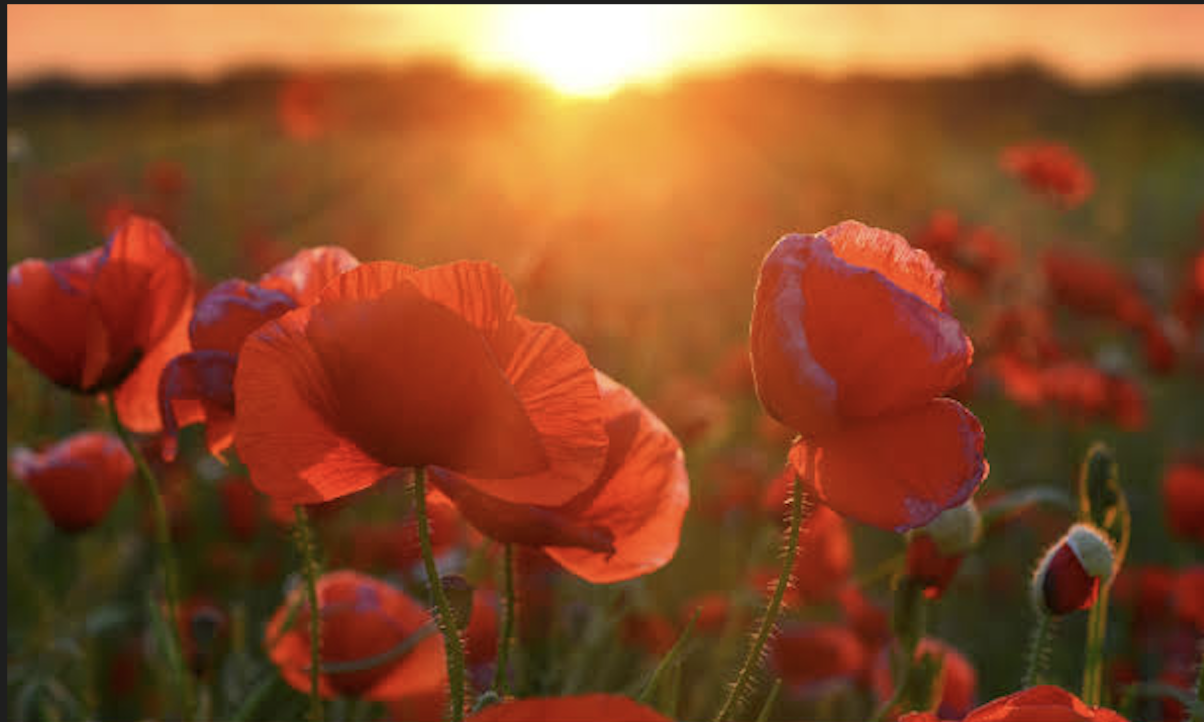
Every November, we see Canadians pin poppies to their coats and say the lines many of us remember since elementary school, “In Flanders fields the poppies blow / Between the crosses, row on row.” What a lot of people don't know is that the author of Canada’s most famous war poem was, first and foremost, a doctor. Lieutenant-Colonel John McCrae was a Canadian army physician, and the poem he wrote in 1915 is, in many ways, an early example of what we now call narrative medicine. He was a doctor who used storytelling to process grief and give voice to what he saw happen on battlefields.
McCrae was born in Guelph, Ontario, in 1872 and trained at the University of Toronto’s medical school. When the First World War began, he enlisted at 41 and served as a medical officer with the Canadian Field Artillery. By April 1915, he was stationed near Ypres, Belgium (Veterans Affairs Canada (VAC), 2026). On May 2, his close friend Lieutenant Alexis Helmer was killed in action and buried in a makeshift grave. Poppies were already blooming between the crosses, and the next day, McCrae wrote the poem (VAC, 2026).
What stands out is whose voice the poem uses. It speaks as the dead: “We are the Dead. Short days ago / We lived, felt dawn, saw sunset glow.” McCrae’s job was to keep soldiers alive. In his poem, he gave the ones he could not save a voice. For a physician surrounded by loss, that was a choice to bear witness rather than look away.
Today, Dr. Rita Charon, who founded the field, describes narrative medicine as medicine practiced with the ability to “recognize, absorb, interpret, and be moved by the stories of illness” (Charon, 2006). One of its core tools is reflective writing, which gives clinicians a way to process what they witness and to stay connected to the people they care for (Charon, 2001). McCrae never used the term, but in many ways he practiced it on that day in 1915.
Healthcare workers carry stories, which include the patients they lose, the moments they cannot forget, the grief they rarely have time to feel. Without somewhere to put those stories, they can weigh heavily. Writing gave McCrae a way to mourn his friend and to make sure the dead were remembered as people, not numbers. His poem reminds us that medicine is a deeply human act, and that the people providing care are human too. McCrae himself never saw the war end; he died of illness in January 1918 while still serving (VAC, 2026). His words, first published in Punch magazine in December 1915, outlived him.
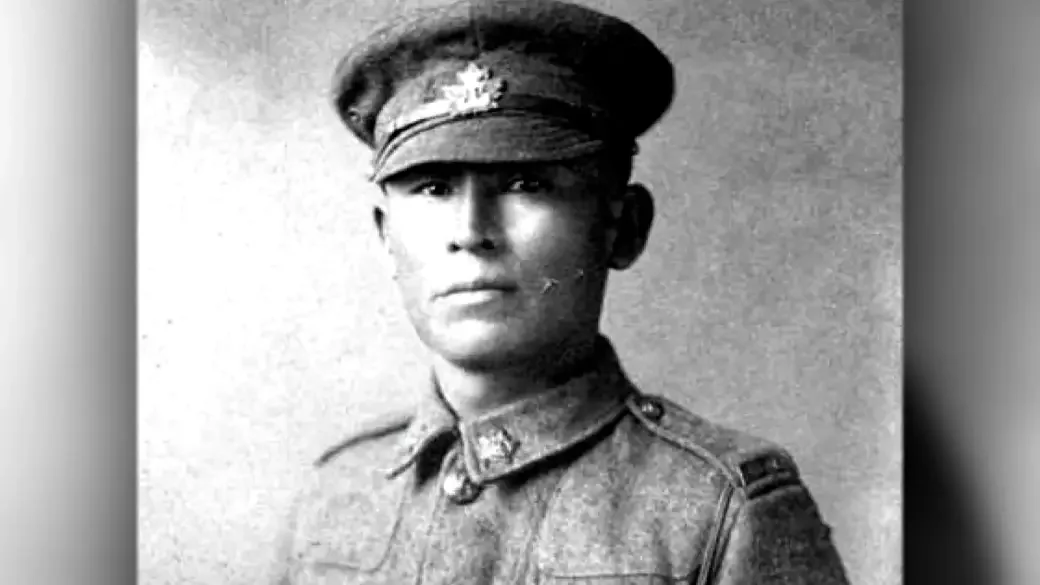
Remembrance is also a question about whose stories get told. Three days before Remembrance Day, on November 8, Canada marks Indigenous Veterans Day. For decades, Indigenous veterans were not able to take part in Remembrance Day ceremonies as a group, so in 1994, Indigenous people in Winnipeg held the first day of remembrance for Indigenous veterans, now known as Indigenous Veterans Day and observed across the country (Lewis, 2023). Veterans Affairs Canada estimates that more than 12,000 Indigenous people served in the First and Second World Wars and the Korean War. Many came home to deep inequities: their benefits were often controlled by untrained government officials, and many were shut out of the support other veterans received (Lewis, 2023).
Narrative medicine teaches us that listening is a form of care. Remembering fully means listening to the stories that were left out, and recognizing how those injustices still shape health and wellbeing in Indigenous communities today.
McCrae’s poem ends with a call to the living: “To you from failing hands we throw / The torch; be yours to hold it high.” For those of us in healthcare, or hoping to enter it, holding that torch might mean something simple but difficult such as paying close attention, bearing witness to suffering, and making space for the stories of patients, caregivers and communities that might otherwise be forgotten. This November 11, as we pause in silence, we can remember that remembrance itself is an act of storytelling.
Lest we forget.
By Jazbia Fazal I Co-Vp Academic
References:
Charon, R. (2001). Narrative medicine: A model for empathy, reflection, profession, and trust. JAMA, 286(15), 1897–1902. https://doi.org/10.1001/jama.286.15.1897
Charon, R. (2006). Narrative medicine: Honoring the stories of illness. Oxford University Press.
Lewis, H. (2023, November 8). Indigenous veterans ‘served with distinction,’ and came home to no support. Global News. https://globalnews.ca/news/10078857/indigenous-veterans-day-nov-8-aboriginal-veterans/
McCrae, J. (1915, December 8). In Flanders fields. Punch.
Veterans Affairs Canada. (2026). 10 quick facts on... In Flanders Fields. https://veterans.gc.ca/en/remembrance/get-involved/ways-remember/flanders-fields/10-quick-facts-flanders-fields
