
Involuntary care under British Columbia’s Mental Health Act is being called into question again after the recent Vancouver municipal election. Two plebiscite questions concerning public safety were added to the ballot, one asking whether the province should convert the old St. Paul’s Hospital site into a secure facility providing voluntary and involuntary care beds for those with severe substance use and mental health disorders [1]. 68% of Vancouver residents voted in favour of this motion; however, critics brand this move as an election ploy [1]. Support for expanding involuntary care comes not only from the municipal level, but also the provincial. Over the past few years, the BC government has opened new involuntary care facilities in Surrey, Maple Ridge, and Prince George [2].
In addition to political criticism, the Mental Health Act has also been scrutinized legally. In July, the BC Supreme Court found that some sections of the Mental Health Act violated the Canadian Charter of Rights and Freedoms [3]. One problematic section outlined what is called deemed consent, which states that once a patient is admitted involuntarily, they are deemed to have consented to any treatment authorized by the medical team [3]. This strips patients of their rights and implies that those with mental health disorders inherently lack decision making capability. Importantly, the Supreme Court found that these violations of rights were not justifiable under section 1 of the Charter which allows for reasonable exemptions if the benefit to society outweighs the violation [3].
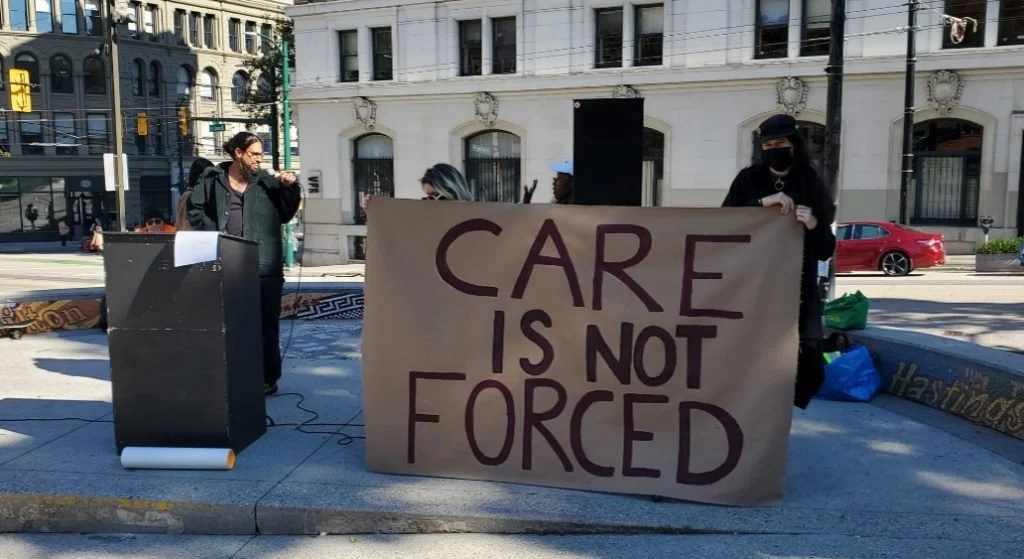
The Supreme Court’s ruling highlights a major criticism of the involuntary care model; there is no evidence of better healthcare outcomes when compared to voluntary treatment [4]. In fact, involuntary treatment for substance use disorders can lead to negative outcomes like increased risk of post-release overdose, mortality, and psychological harm [4].
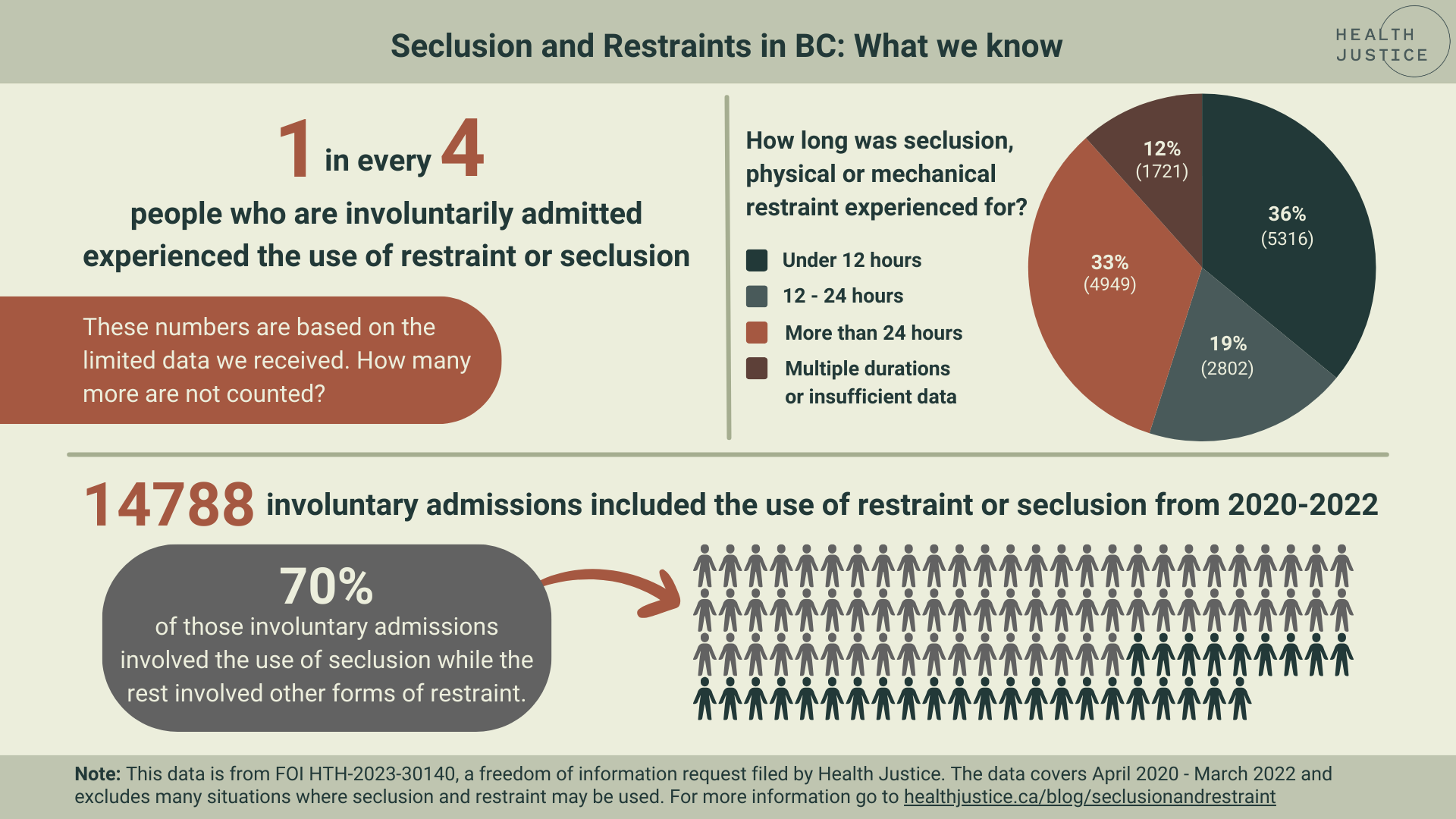
The carceral approach taken with involuntary treatment can create lasting trauma. People with lived experience described the use of restraints, seclusion rooms, and forced medication that led to feelings of disempowerment, along with a distrust of the healthcare system [4]. Negative experiences with involuntary care deter people from seeking help in the future, creating additional barriers to mental health treatment. Discrimination in the forms of anti-Indigenous racism, sexism, and transphobia is also well documented by healthcare providers and people with lived experience [4]. The prevalence of anti-Indigenous racism is particularly concerning as Indigenous youth are disproportionately represented in involuntary admissions [5]. The removal of decision-making authority through involuntary care is yet another example of state-sponsored oppression of Indigenous peoples. Though expanding involuntary care to bolster public safety may sound like a promising solution, it is important to consider its implications on patient autonomy and healthcare experiences.
Kulkarni, A. (2026, October 22). Vancouver residents vote yes on 2 plebiscite questions regarding drug use. CBC. https://www.cbc.ca/news/canada/british-columbia/vancouver-plebiscite-2026-drug-use-results-9.7390927
Depner, W. (2025, September 27). B.C. premier David Eby announces new involuntary
care facilities for Surrey, Prince George. CBC. https://www.cbc.ca/news/canada/british-columbia/bc-premier-david-eby-involuntary-care-beds-surrey-prince-george-1.7645261Goudie-Groat, M. (2026, August 13). Court finds BC’s involuntary treatment approach
violates the charter, but what does that mean? Health Justice. https://www.healthjustice.ca/blog/deemed-consent-decisionSnow, M. E., Salmon, A., Banjo, J., Morrow, M., & Varcoe, C. (2025). “Backed into a
corner”: Lived experiences of receiving and providing involuntary psychiatric treatment under British Columbia’s mental health act. https://doi.org/10.1101/2025.08.01.25332770Treatment over detention: Immediate changes required regarding the use of involuntary detentions for youth under the mental health act | British Columbia Assembly of First Nations. (2021). Bcafn.Ca. https://www.bcafn.ca/news/treatment-over-detention-immediate-changes-required-regarding-use-involuntary-detentions-youth
Health Justice. (2025). Seclusion and Restraints in BC: What We Know. In Health Justice. https://static1.squarespace.com/static/5e34ed207332cf46d561c2da/t/67e5df88f15eaa326017c762/1743118217536/Seclusion+and+Restraints+in+BC+What+we+know+%281%29.png
Nadalini, D. (2024). Community groups and advocates rallied in Vancouver Sept. 29, 2024, to share their concerns about involuntary care in the province. . In City News. https://vancouver.citynews.ca/2024/09/29/vancouver-involuntary-care-rally/

